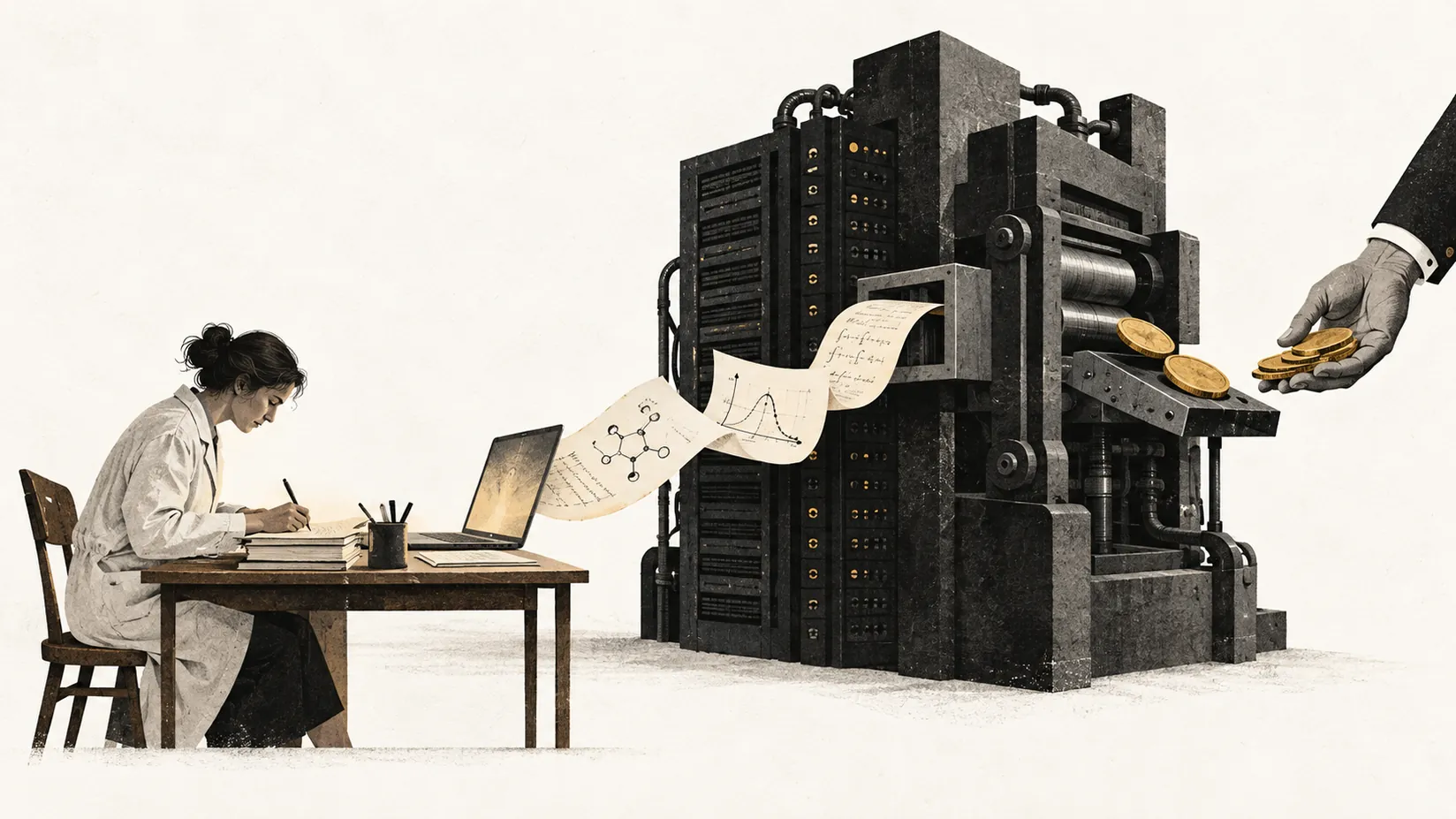
The news that OpenAI Prism, the advanced LaTeX workspace, will shut down on January 1, 2027, has raised serious questions about the fate of researchers' unpublished scientific work and the transparency of the platform's data practices. But for those of us who actually used it, the sudden announcement of its planned closure feels like the final piece of a calculated playbook.
When Prism launched, the bait was irresistible. OpenAI gave us a completely free workspace with unlimited projects, powered by their latest GPT-5.2 model. The model's mathematical and scientific reasoning was so advanced that researchers willingly dumped entire multi-file LaTeX projects, unpublished data into the platform.
But behind the scenes, the red flags were everywhere.
As a user, I noticed early on that there was no clear, transparent privacy policy specifically isolating our pre-publication research. I personally emailed OpenAI support and their product team several times how our data was being handled.
The response? Complete silence. I was ghosted.
Now, less than a year after drawing in mass academic data, OpenAI announces a total platform shutdown.
It’s Not Just OpenAI.
Look across the industry. Anthropic is pulling the exact same tactics—offering free credits and hyper-specialized tools targeted squarely at scientists.
The cynical reality is hard to ignore: Frontier models don’t just need raw internet text anymore; they need high-level, human-expert reasoning. What better way to harvest state-of-the-art (SOTA) research data than giving scientists an elite free tool, letting them feed the system their life’s work, and closing shop once the data training loop is satisfied?